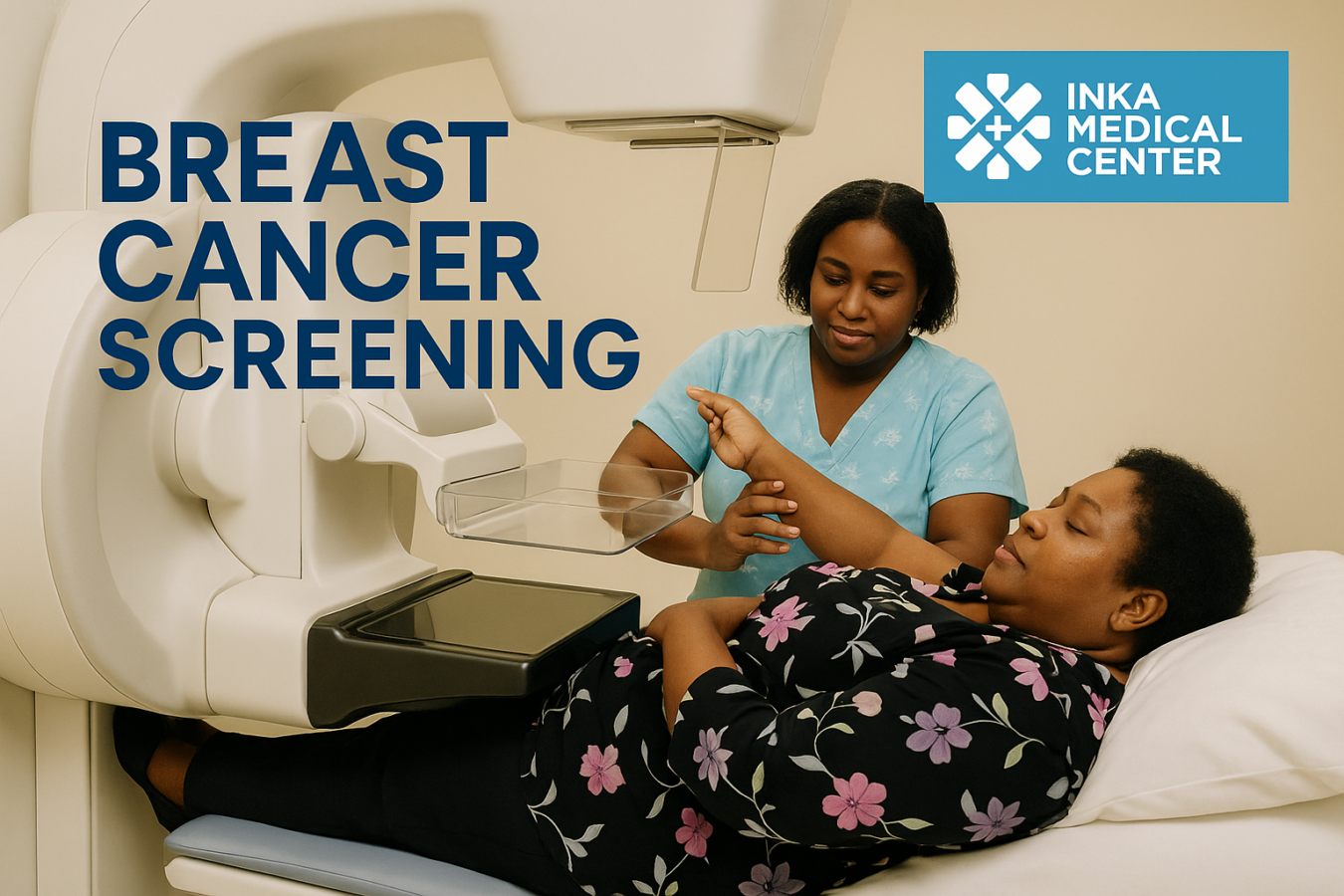
Breast Cancer Screening in 2025: Tests, Guidelines, Early Detection, and Where to Get Checked in Kenya
Breast cancer screening cannot stop cancer from developing, although it greatly improves the chances of early detection. Finding cancer early increases the chances of successful breast cancer treatment. A breast screening test is a preventive measure and not an indication of disease. Taking this step supports your long-term health.
Breast cancer screening helps detect cancer early, before symptoms appear, when treatment is simpler, and outcomes are far better. At Inka Medical Centre, we offer modern and reliable screening options supported by expert guidance. Women can protect their health with confidence through routine evaluations. Our medical team provides clear information to help you understand your options during every visit.
Access the best breast cancer screening services here at Inka Medical Centre with fair prices and quality services.
ALSO READ : Best medical centre in Kenya: Inka Medical Centre

What breast cancer screening means

Breast cancer screening uses tests such as a mammography test, ultrasound, and MRI to look for cancer in women who do not have symptoms. These checks help identify small changes that may not be noticeable during normal breast exams. Identifying cancers early through a structured screening program increases the success of treatment and improves survival rates.
ALSO READ : The Importance of Mental Health Counselling
Why early detection matters and who needs screening
Early detection finds cancer when it is small, localized, and easier to treat. This improves survival, reduces the need for aggressive treatment, and helps women maintain a better quality of life. Women aged forty and above or those with strong risk factors such as family history, dense breasts, or genetic mutations benefit the most from consistent screening. Our specialists at Inka Medical help you determine the safest screening schedule for your individual risk level.
The difference between screening and diagnostic imaging
Screening imaging checks healthy women for early cancer signs even when there are no symptoms. Diagnostic imaging, on the other hand, investigates specific problems such as a lump, pain, or abnormal screening results. Screening involves taking fewer images and focuses on prevention, while diagnostic tests provide detailed views to identify the cause of a concern.
Breast cancer screening tests used at Inka Medical Center
- The mammography test is used for routine checks and is the primary breast screening test for detecting early-stage disease.
- Breast ultrasound helps identify whether a lump is solid or filled with fluid and is common for women with dense breasts.
- Breast MRI is used for high-risk patients or when a detailed view is needed for accurate breast cancer testing.
- A clinical breast exam enables a clinician to detect lumps or changes that require further investigation.
- Breast self-awareness encourages you to understand your normal breast appearance and report any changes early.
How to prepare for breast cancer screening

Before your appointment
- Choose a date in the week after your period because the breasts are less tender.
- Tell your clinician if you have implants, a pacemaker, new symptoms, or a family history of cancer.
- Please bring your previous imaging results so we can accurately compare your scans.
- Arrange childcare because children cannot stay in the screening spaces.
On the day of screening
- Avoid applying lotions, deodorant, creams, or powders to the chest or underarms, as they may affect the images.
- Wear a two-piece outfit so you only remove your top.
- Reduce caffeine to help lessen tenderness during the exam.
- Arrive early to settle in and complete any forms needed for your breast cancer check-up.
During the screening
- Remove your top and bra for clear breast positioning.
- Inform the technologist about any areas that are painful or sensitive.
- Follow positioning instructions to help produce clear images during your mammography test.
Benefits of breast cancer screening
Breast cancer screenings lower the risk of dying from breast cancer by finding tumors early before they spread. It allows doctors to use less invasive treatments and helps women recover quickly with fewer long-term effects. Early findings are linked to survival rates of over 99% in localized disease. Inka Medical Centre supports early detection to give every woman a strong chance of successful treatment.
Risks and limitations of breast cancer screening
Breast cancer screenings can sometimes show abnormal results that are not cancer, which may cause temporary anxiety. Some very slow-growing cancers may be found, even though they may not pose a long-term risk. Mammograms use low-dose radiation, but the risk is extremely small compared to the benefits.
Signs and symptoms to watch out for outside screening
- A new lump or thickened area in the breast or armpit.
- Skin changes such as dimpling, redness, or texture changes.
- Nipple discharge, inversion, or visible changes in shape or position.
- Persistent breast pain, swelling, or enlarged lymph nodes.
ALSO READ : Cancer Screening Tests – Inka Medical Center

How to follow up with us after normal or abnormal results
Normal results
Most normal results need no further action. Contact us if symptoms continue or new changes appear.
Abnormal results
Do not panic, as many abnormalities are not cancerous. You can schedule a consultation with our professionals to fully understand your results. Prepare any questions for the review appointment to ensure greater clarity. Ensure that you follow the recommended plan, which may include additional imaging or biopsy.
What to do if symptoms develop after a normal mammogram
A normal result does not guarantee all cancers are visible, especially in women with dense breasts. If you notice new symptoms such as lumps or skin changes, contact Inka Medical Centre immediately. Further evaluation may include a diagnostic mammogram, an ultrasound, or a biopsy to understand the cause. Most findings are not conclusive, but testing ensures your safety.
How screening works for people with prior breast surgery
After lumpectomy
- A baseline scan is done six to twelve months after treatment.
- Annual mammograms are recommended for both breasts.
- Additional imaging may be necessary to assess the treated area.
- Clinical breast exams remain important for ongoing monitoring.
After mastectomy
- No routine mammograms are needed after both breasts are removed.
- Annual screening continues for the remaining breast after unilateral mastectomy.
- Physical exams check the chest wall and surrounding tissue for changes.
After reconstruction or implants
- Inform the facility so appropriate imaging techniques can be used.
- Extra views help show breast tissue clearly.
- MRI or ultrasound may be added for patients at high risk.
Why trust Inka Medical for the best breast cancer screening services in Nairobi
Inka Medical Centre offers modern imaging, experienced clinicians, and supportive follow-up care for every patient. Our team takes time to explain your results and guide you through any next steps. We use reliable breast cancer screening methods and advanced equipment to ensure accurate diagnosis. Women in Nairobi trust us for compassionate care and dependable breast health services.
When to see a doctor
See a doctor immediately if you notice new lumps, breast changes, nipple discharge, or persistent pain. These symptoms can occur with non-cancerous conditions, but they must be checked quickly. Waiting for your next routine screening may delay important care. Our clinicians are available daily to assess any new concerns with prompt imaging.
ALSO READ : The Importance of Mental Health Counselling
FAQs about breast cancer screening
What are the 7 warning signs of breast cancer?
Lumps, swelling, skin irritation, nipple changes, discharge, persistent pain, and changes in size or shape are common warning signs.
What is the recommended age for a mammogram?
Most women should begin screening at age 40, depending on their risk level, and should continue yearly or every other year until at least age 74.
What are the screening tests for breast cancer?
The main test is a breast cancer test, also known by its name, which is the primary method used worldwide. Ultrasound and MRI are added based on risk, density, or clinical findings.
How much does breast cancer screening cost in Kenya?
Mammograms range from about two thousand five hundred shillings to four thousand five hundred shillings. Ultrasounds range from $1,500 to $4,500. Consultation fees start at around $2,300. Some public facilities offer subsidized services and NHIF may cover part of the cost.
Conclusion
Breast cancer screening is one of the most effective tools for early detection and better treatment outcomes. Inka Medical Centre supports every woman with accurate imaging, caring professionals, and clear guidance. Regular screening, breast awareness, and prompt attention to symptoms help save lives. Visit us today for reliable and compassionate breast health services.
ALSO READ: Why Regular Health Checkups Are Essential for Everyone