Cancer Screening Tests – Inka Medical Center
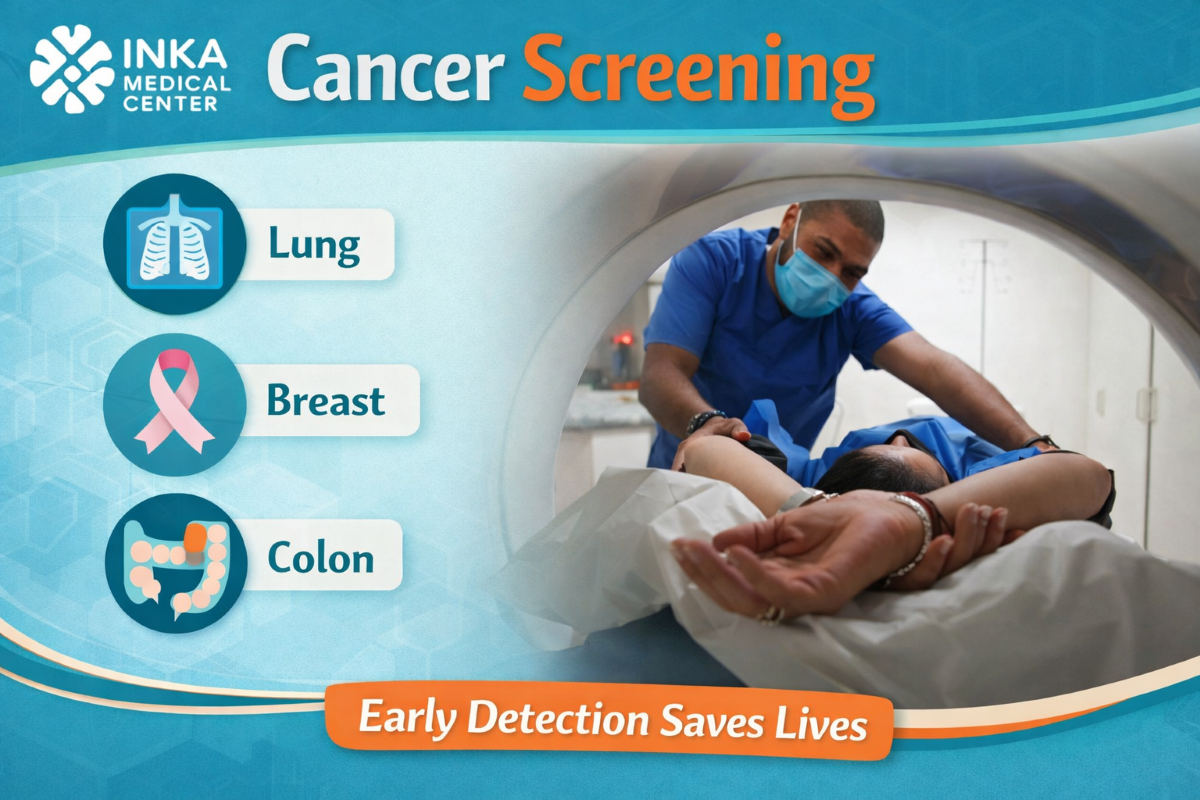
Cancer screening tests help find cancer early, even before symptoms start. Early detection gives you a better chance of successful treatment and faster recovery. At Inka Medical Center, we use safe, modern tools to check for different cancers and guide you with the right plan for your age and health.
Cancer does not always show signs in its early stages, which is why screening is so important. These tests look for small changes in your body- such as unusual cells, lumps, or hidden blood- that may point to early cancer. Different methods are used for different cancers, including blood tests, imaging, physical exams, and specialized checks like Pap tests or colonoscopies. Learn more about cancer screening tests, methods and guidelines here.

Which are the most common cancer screening methods in Kenya?
Physical exams & history
Doctors check your body for lumps, skin changes or swelling. They also ask about your health and family history. This helps them understand your risk for certain cancers. It is often the first step in screening for cancer.
Imaging
Imaging includes X-rays, CT scans, MRI scans and mammograms. These early cancer detection tests show what’s happening inside your body. They help find growths that cannot be seen or felt during a physical exam. Imaging is especially useful for breast, lung and abdominal cancers.
Genetic testing
Genetic tests look at your DNA to find inherited risks. These tests help you understand if you have genes linked to certain cancers. They also guide doctors on the best prevention or screening plan. It is helpful for people with strong family cancer histories.
Laboratory tests
Lab tests examine blood, urine or tissue samples for abnormal cells. Tests like Pap smears and HPV checks detect early cervical changes, while blood tests can check for specific cancer markers. Laboratory tests make it easy to detect cancer early.
Standard cancer screening tests
Breast cancer
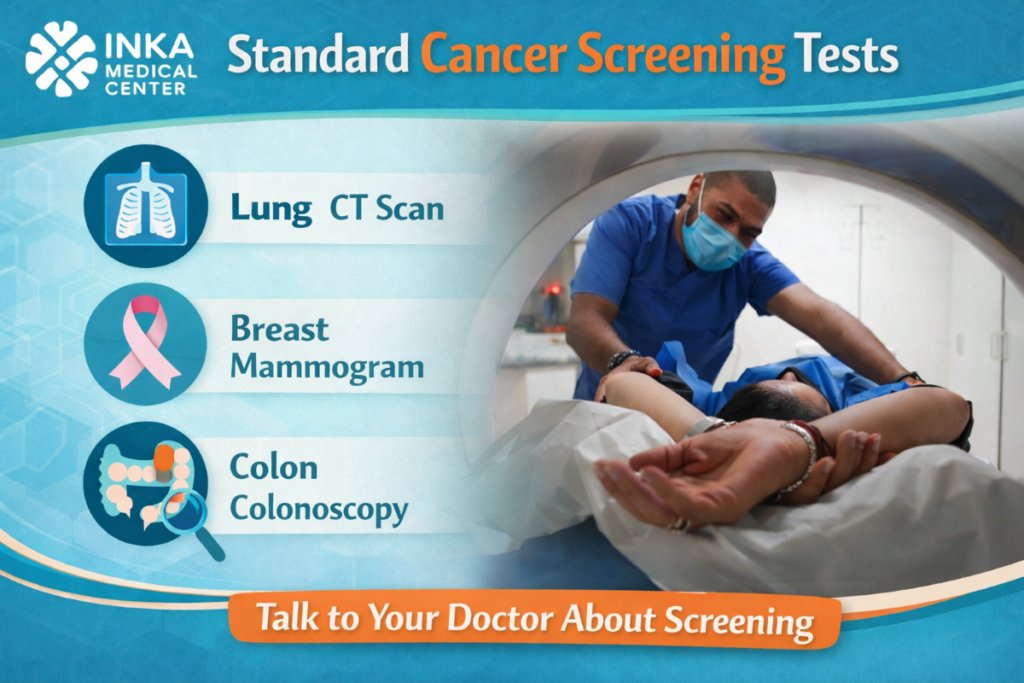
Here, a doctor performs a Clinical Breast Exam (CBE) to feel for lumps or changes. Women are encouraged to do Breast Self-Exams (BSE) at home as a way of cancer testing. A mammogram, which is a special breast X-ray, is the main cancer screening test for early breast cancer detection. It helps find changes before you feel a lump.
Cervical cancer
Kenya uses several simple and effective screening cancer tests for cervical cancer. VIA and VILI are low-cost visual checks used widely in public hospitals. A Pap smear examines cervical cells for early problems. The HPV DNA test detects high-risk HPV that causes most cervical cancers and is growing in use.
Colorectal(colon) cancer
A colonoscopy allows doctors to look inside the colon for polyps or early cancer signs. Other testing for cancer includes FIT and stool DNA tests, which check for hidden blood or abnormal cells. Some people may also get a virtual colonoscopy or flexible sigmoidoscopy. Starting screenings at age 45 helps catch colon cancer early.
Lung cancer screening
People at high risk, especially long-term smokers, may need a low-dose CT scan. This cancer test helps find lung cancer early before symptoms appear. Our team doctors at Inka medical center are trained and qualified to test for lung cancer check up and give professional help.
ALSO READ: Best medical centre in Kenya: Inka Medical Centre

Other screening tests
Oral cancer screening
Doctors look inside the mouth to check for unusual sores or patches or any lumps that do not heal. This exam helps find early signs of mouth or throat cancer. It is quick and usually done during a normal check-up.
Breast MRI
A breast MRI is an imaging test used for people with a high risk of breast cancer. It is helpful for those who carry harmful BRCA1 or BRCA2 gene changes. Some women with dense breasts may also get this test as extra screening. It supports mammograms but does not guarantee better long-term results.
Transvaginal ultrasound
This test creates clear images of the ovaries and uterus. It is sometimes used for women at high risk of ovarian or endometrial cancer. These risks may come from BRCA gene changes or Lynch syndrome. However, transvaginal ultrasound has not been proven to lower cancer deaths.
Virtual colonoscopy
A virtual colonoscopy shows detailed images of the colon and rectum from outside the body. It may be recommended for people who prefer it over other colon tests. A Virtual colonoscopy may sometimes find issues outside the colon that need extra checks.
CA-125 test
The CA-125 blood test is sometimes used to look for early signs of ovarian cancer. It is often done together with a transvaginal ultrasound. It can help diagnose cancer in women with symptoms or track cancer after treatment.
Alpha-fetoprotein blood test
This test is sometimes used to help find liver cancer early and guide further testing when needed. An Alpha-fetoprotein is mainly for people who face a high risk of liver cancer and can be used together with a liver ultrasound.
Multi-cancer detection tests
These tests look for signals in body fluids that may come from cancer cells. The signals are called biomarkers or tumor markers. They may detect several cancer types depending on what they measure. Their accuracy for screening healthy people is still unknown and under study.
Skin exams
Doctors may ask people at risk for skin cancer to check their skin often. Although they have not been proven to lower death rates from skin cancer, these exams help you spot unusual moles or changes early. Still, reporting new or changing spots to a doctor is important.
PSA test
The PSA blood test checks for signs of prostate cancer and can slightly reduce the chance of dying from it. It is sometimes used with a digital rectal exam. Doctors usually avoid routine PSA testing for low-risk men because it may cause false alarms or unnecessary treatment.
Why does cancer screening matter?
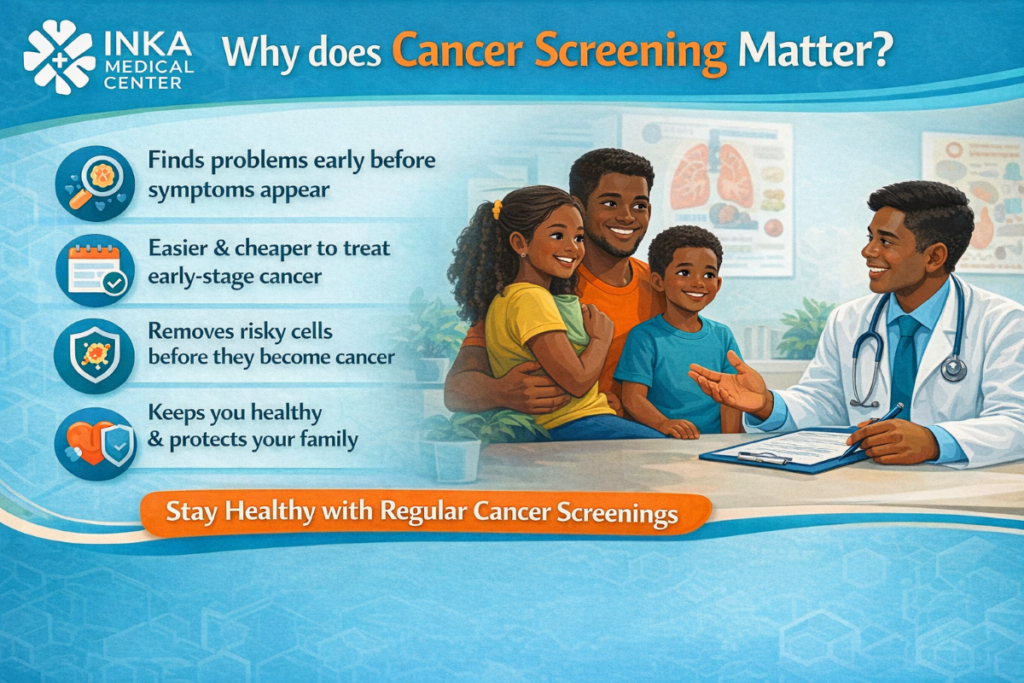
Cancer screening finds problems early before symptoms appear. Early-stage cancer is easier and cheaper to treat. Screening can also stop cancer from forming by removing risky cells early. Regular cancer screening tests help keep you healthy and protect your family.
Get cancer screening tests at Inka medical center
At Inka Medical Center, we offer safe, accurate and affordable cancer testing. Our team uses modern tools and follows updated guidelines to give you trusted care. You get personalized attention, quick results and clear explanations.
Visit us today for an early cancer detection test and take control of your health.
ALSO READ : The Importance of Mental Health Counselling
FAQs about cancer screening tests
What is a screening test for cancer?
A screening test for cancer checks your body for early warning signs before symptoms appear. It may involve blood tests, scans or physical exams.
What are 20 warning signs of cancer?
Common signs include lumps, unexplained weight loss, constant tiredness or skin changes. You may have long coughs, trouble swallowing or unusual bleeding. Some people get stomach issues, recurring fevers or swollen lymph nodes.
Is there a test that can check for all cancers?
No single test checks for every cancer, but new multi-cancer detection tests can find DNA signals from several cancers.
When to get screened for cancer?
You start screening for cancer at different ages based on the cancer type. Breast screening starts around 40–45, and colorectal screening begins at 45. Some, like cervical cancer screening, begin earlier.
Conclusion
Screening for cancer early gives you the best chance for safe and effective treatment. With many types of cancer screening tests available, you can choose the right plan for your health. Inka Medical Center offers a trusted cancer screening process designed to protect your health. Get screened today and take the first step toward better health.
ALSO READ: Why Regular Health Checkups Are Essential for Everyone