Blood donation in Kenya: Overview, procedure, eligibility, and benefits | Inka Medical Center
Blood donation plays a vital role in saving lives across Kenya every day. Hospitals rely on donated blood to treat accident victims, mothers during childbirth, and patients with serious illnesses. At Inka Medical Center, blood donation is conducted safely, professionally, and with donor care as our top priority.
Donating blood is one of the simplest ways to support public health. A single donation can help several patients in need. Many people hesitate because they are unsure about the process or eligibility. This article breaks down the whole blood donation process, explaining everything clearly and simply.
ALSO READ : Best medical centre in Kenya: Inka Medical Centre
What is blood donation?
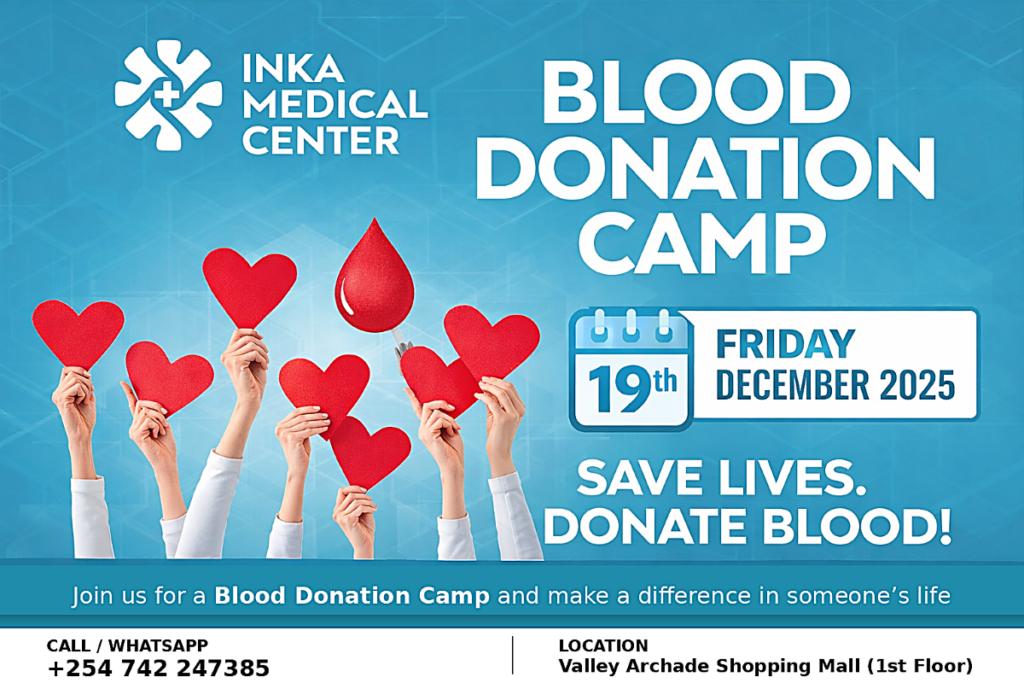
Blood donation is the act of giving blood to someone else for medical use. It is a process where a doctor uses a blood donation needle to collect blood safely from your arm. The donated blood supports surgeries, emergencies, and long-term treatments. The procedure is safe, controlled, and saves lives.
Major types of blood donation
Whole blood donation
This is the most common method for donating blood. Here, one unit of blood is collected and later separated into components. Whole blood donation is suitable for most healthy donors.
Apheresis donation
An apheresis donation uses a machine that collects specific blood components only. The remaining blood components are then returned to your body, allowing you to make frequent donations.
Platelet donation
This type of donation focuses on platelets, which are used for clotting. Platelet donation primarily benefits patients with cancer and trauma. The process takes a longer period but is very safe.
Plasma donation
Plasma contains antibodies and proteins. It is used for burns, shock, and immune disorders. Only plasma is collected during this donation.
Double red cell donation
This method collects only red blood cells. It helps patients with severe blood loss. After a double red cell donation, you wait longer before the next donation.
Autologous donation
This is where you donate blood for your own planned surgery. This ensures full compatibility. It is done under medical guidance.
Understanding the blood donation process
The blood donation procedure begins with:
- Registration – You provide your personal details and identification, and complete a short health questionnaire.
- Health screening- Your doctor then checks your blood pressure, pulse, and temperature. A small finger-prick test is used to measure hemoglobin levels, and only eligible donors are selected to proceed.
- Blood Collection – Approximately 450 ml of blood is collected while you rest comfortably. Sterile equipment is used to collect the blood for about ten minutes.
- Recovery – After donating blood, take a light snack and fluids, then rest for 15 minutes. This prevents dizziness.
ALSO READ : The Importance of Mental Health Counselling
How to prepare for blood donation
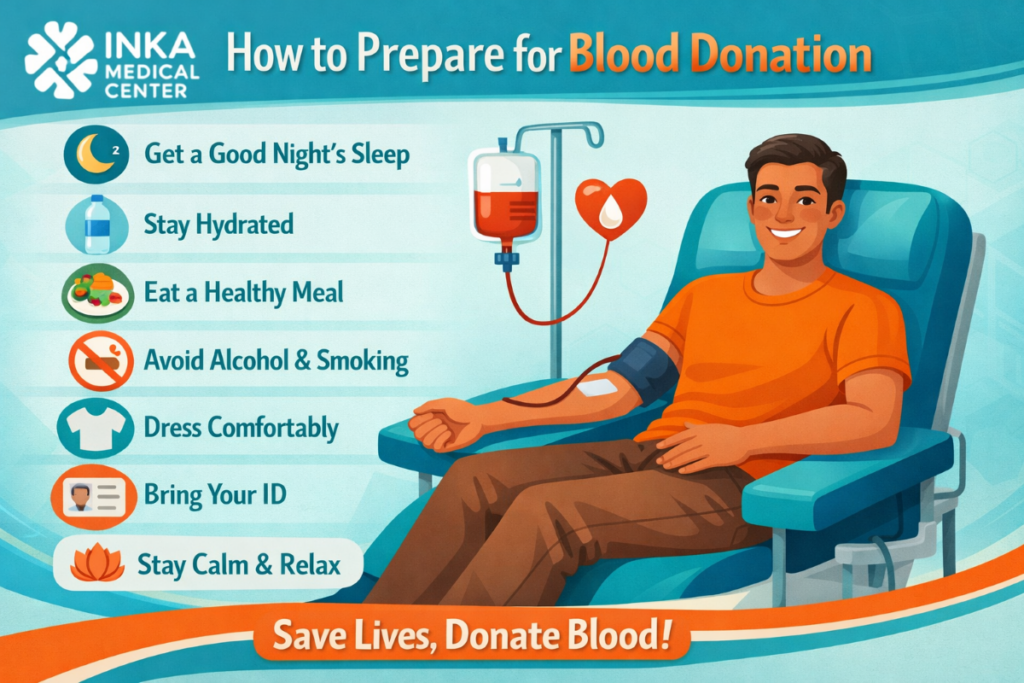
Knowing what to do before blood donation helps ensure a smooth experience. Drink enough water before your appointment and eat a balanced meal with iron-rich foods. Learn more here:
Before donation day
- Eat well
Choose iron-rich foods like beans, spinach, eggs, and meat to help maintain healthy hemoglobin levels. Proper nutrition supports safe donation. - Rest enough
Get at least seven hours of sleep to improve blood flow and reduce fatigue. A rested body donates better, faster, and more. - Avoid fatty foods
Fatty meals affect blood testing accuracy. Avoid fried foods before donating to help ensure clean results.
Donation day
- Hydration
It is important to drink water throughout the day as good hydration improves vein access. It also reduces dizziness. - Healthy meal
Never donate blood on an empty stomach. As a blood donor, eat a full meal three hours before donation to maintain stable blood sugar levels. - Comfortable clothing
Wear clothes with sleeves that roll up easily to facilitate quick access to your arm. Comfort reduces stress, hence streamlining the process. - Valid ID
Carry a government-issued photo ID to confirm your identity, a requirement at all health centers. - Avoid heavy activity
Doctors advise against exercising before donating since heavy activity may cause weakness.
At the donation center
- Check-In
Your ID is verified at reception. Records are updated accurately. This ensures traceability.
- Final screening
Health checks are confirmed again to protect both donor and patient. Safety is the priority in every blood donation procedure. - Relax during donation
Your health practitioner will instruct you to lie back and stay calm as they monitor you throughout the process. This position is prescribed and comfortable for most donors.
After donation care
After donating blood, have a snack and drink plenty of fluids to help your body recover. Sit and rest for about 15 minutes to avoid dizziness, and follow the staff’s advice. Do not drink alcohol or smoke for the next 24 hours so your body can heal well. Lastly, avoid heavy lifting or exercise for one day to reduce strain and aid in faster recovery.
How do I recover after donating blood?
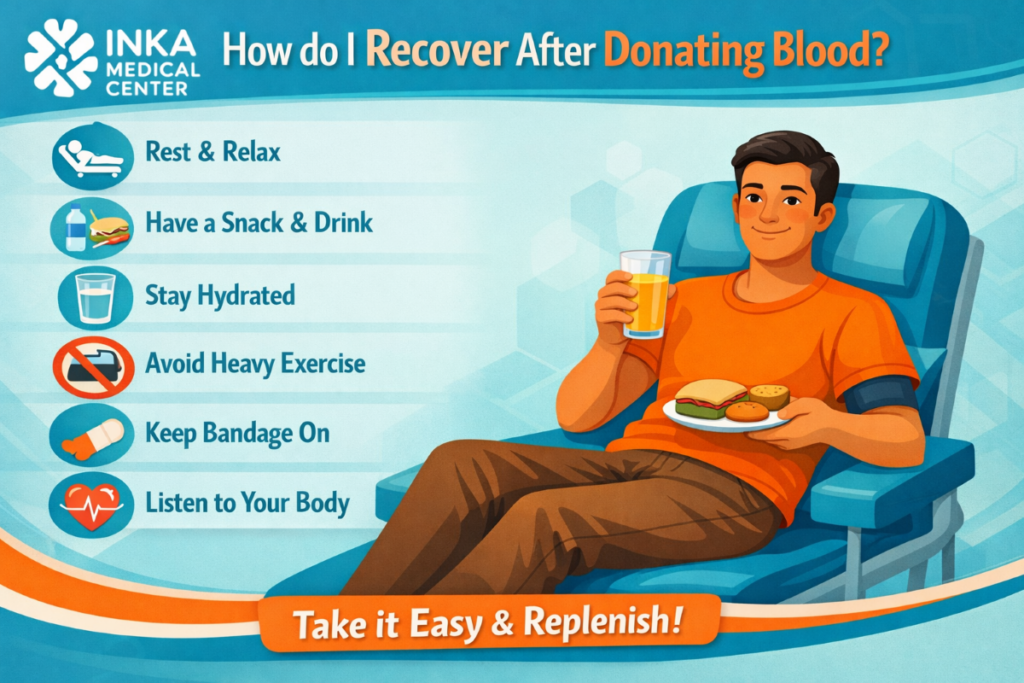
Knowing what to do after donating blood supports a fast recovery. To recover, it is essential to drink plenty of fluids and maintain a balanced diet. We advise patients to rest and avoid heavy activities. Most blood donors feel normal within hours.
Who is eligible to donate blood in Kenya?
A blood donor must meet the health and safety standards highlighted below.
General requirements
- Age
Age is a crucial requirement in blood donation as it ensures donor safety. You must be between 16 and 65 years old to be able to donate blood. First-time donors over 60 may need approval. - Weight
Weight is what supports blood volume balance. The minimum weight to qualify as a donor is 50 kg for women and 55 kg for men. This prevents complications. - Health status
You must feel well with normal blood pressure. Good health with no fever or illness is essential. - Hemoglobin level
You must meet a minimum hemoglobin level of 12.5 g/dL, to be able to donate. This prevents anemia.
How often can one donate blood?
Many donors ask, “How much blood can you donate safely?” A Whole blood donation is allowed after every eight weeks. This gives the body time to replace the red cells donated previously. Other donation types may allow shorter intervals only under medical guidance.
Why should I donate blood?
Donating blood helps save lives daily. It supports surgeries, cancer care, and emergencies. It also provides health insights for donors. Here are the reasons one should donate blood:
1. To save lives
- Emergency care
Blood is needed during accidents and disasters, and an immediate supply saves lives. Donating blood regularly ensures that blood is always available in case of any emergency. - Medical treatment
Patients require blood for surgery and to manage chronic illnesses. Donations keep hospitals running since blood has no substitute - Multiple patients helped
One donation can help three people. This is achieved by separating blood components, hence multiplying the impact.
2. For your health
- Health screening
Each donation includes vital checks. During this time, hidden health issues may be detected early, hence supporting prevention. - Iron balance
Donating blood is medically beneficial as it helps reduce excess iron in the body. Balanced iron supports heart health. - New blood cells
After a donation, your body produces fresh blood cells. Recovery is natural and improves circulation.
3. Community support
Local blood banks rely on regular donors. Your donation could be used to support the people in your local community.
4. Personal fulfillment
Helping others boosts one’s emotional health. Many blood donors feel proud and fulfilled after giving, as it creates a sense of purpose and fulfillment.
Common myths about blood donation
Myth: Donating blood is painful
Fact: The process is quick and safe, with only a slight pinch felt. Most donors feel fine afterward.
Myth: You can catch diseases
Fact: During the blood donation process, all equipment is sterilized and used only once, thereby reducing the risk of infection. Our safety standards at Inka Medical Center are extremely strict, ensuring safety at every step.
Myth: Donation makes you weak
Fact: Only one unit is collected during a blood donation. Body fluids usually begin to recover within 24 hours, with the red cells recovering naturally.
Myth: Tattoos stop you from donating
Fact: Even with a tattoo, you can still donate blood after a waiting period, depending on the center.
Myth: Older people cannot donate
Fact: There is no maximum age limit, as health matters more than age. Fit donors are welcome to donate regardless of their age.
Myth: Common blood types are not needed
Fact: The demand for common blood is always high as it is used daily. This highlights that all blood types are essential, including the common types.
Myth: Medication disqualifies you
Fact: In blood donation, medications are allowed but eligibility depends on the condition.
FAQs About Blood Donation in Kenya
What are the requirements for donating blood in Kenya?
To donate blood, you must meet the required age, weight, and health criteria. Additionally, screening is essential as it ensures safety.
Who is the highest blood donor in Kenya?
The highest blood donor in Kenya is Kennedy Sanya. He is a public prosecutor who has donated blood more than 100 times and works as a national Blood Ambassador. Aisha Mukami Dafalla is the top female blood donor, recognized for donating platelets and encouraging many people to donate blood.
What are the rules around donating blood?
Blood donors must be healthy and truthful during the screening process. Follow donation waiting periods. Safety comes first.
How much is one unit of blood in a blood bank?
One unit of blood in a blood bank is typically about 450 to 500 milliliters, collected from a single donation. This blood can be separated into its component parts, such as red blood cells or plasma, depending on the patient’s specific needs. It is essential to know that blood isn’t sold.
Conclusion
Blood donation is a safe, simple, and life-saving act that supports patients across Kenya. Understanding the process helps remove fear and builds confidence in donating. Here at Inka Medical Center, we provide a safe, professional, and caring environment for every blood donor. Visit us to donate blood and help strengthen Kenya’s healthcare system while saving lives today and in the future.
Click here to book an appointment and donate blood with Kenya’s most trusted health center.
ALSO READ : Inka Medical Center-Best Healthcare Facility In Nairobi, Kenya