Cervical Cancer: Symptoms, Signs, Causes & Treatments
Today, one of the most deadly yet preventable cancers affecting women is cervical cancer. Thousands of women across the globe are diagnosed with cervical cancer every year. Despite pausing life threatening conditions, detecting cervical cancer at an early stage and doing regular screening can help save lives.
Book an appointment with Inka Medical Centre today and get your cervical cancer screening done.
ALSO READ : Breast Cancer Screening in 2025: Tests, Guidelines, Early Detection, and Where to Get Checked in Kenya

Cervical Cancer Definition
Cervical cancer is the formation of cancerous cells along the cervical lining. Generally, cervical cancer is associated with frequent infection with HPV. Consequently, HPV is a virus that is mostly transmitted through sex. It is very hard to detect the symptoms of cervical cancer when it is at an early stage. Therefore, for early detection it is important to undertake regular screening.
ALSO READ : Cancer Screening Tests – Inka Medical Center
Main Types of Cervical Cancer
Cervical cancer is either Squamous cell carcinoma or Adenocarcinoma. The most common cervical cancer is squamous cell carcinoma accounting for up to 80% to 90% of cervical cancer. On the other hand, adenocarcinoma accounts for 10% to 20%. In some rare cases, you can experience both cancers.
What Are the Main Risk Factors and Causes of Cervical Cancer?
Understanding what causes cervical cancer can help you to take preventive measures. HPV strains particularly types 18 and 16 are the main cause of cervical cancer. Additionally, cervical cancer is common among 30 to 35 year old women. Other threatening factors include smoking, family history, multiple sexual partners, long term use of contraceptive pills, and early sexual activity.
10 Signs and Symptoms of Cervical Cancer
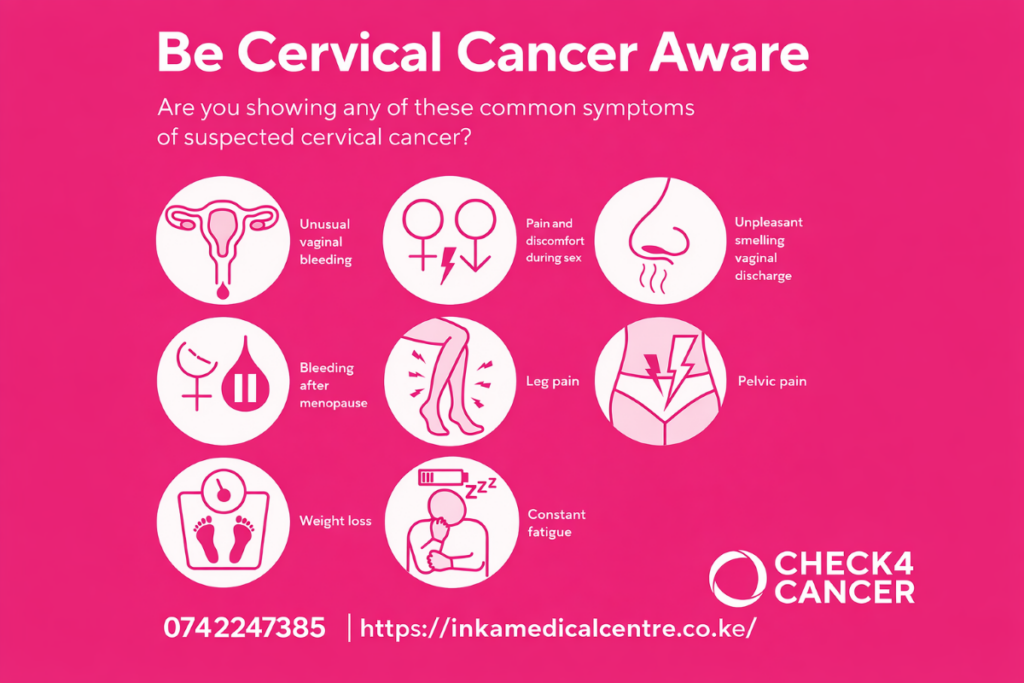
It is very tough to detect cancerous cells at the cervix unless you perform regular screening. But there may be symptoms for cervical cancer and they include:
Foul, watery discharge
Abnormal menstrual
Pain during sex
Blood in urine
Painful urination
Diarrhea
Loss of weight, fatigue, and lack of appetite
Swollen legs
Abdominal pain
Pain when pooping
Do not ignore any of the symptoms even if they feel mild.
Cervical Cancer Diagnosis
Cervical cancer normally grows slowly and in many years. But, performing Pap smear test and timely cancer screening can help to detect it at an early stage. The common tests to determine cervical cancer are:
Colposcopy
It identifies the location of abnormal cells in the cervix. The doctor inserts a speculum into the vagina to view the vagina and cervix through a colposcope.
Cone biopsy
This test involves the removal of a cervical tissue for study. This method is used in cases of suspected cervical cancer.
Possible Treatments
After detecting cervical cancer, it is staged. The stages begin from stage one where abnormal cells are identified on the cervix tissue to stage four where the cancer is beyond the pelvic. Treating cervical cancer involves surgery, targeted medicines, radiotherapy, or chemotherapy. For the early stage the treatment usually involves surgery and chemotherapy. For a locally advanced stage, chemotherapy and radiotherapy are combined. More so, if the disease is metastatic, the patient is taken through palliative care. Support groups are also essential in helping a patient to cope physically and emotionally.
ALSO READ : Suicide: Facts, Risks, Preventions, & Helplines.

Cervical Cancer Screening in Kenya
Saving lives against cervical cancer starts by performing regular screening. The most leading cancer deaths among women in Kenya is cervical cancer. However, these deaths can be minimized by doing routine HPV screening and Pap tests to diagnose the cancer at an early stage. Whenever you need to get quick and effective screening, contact Inka Medical Centre and schedule your visit.
When to Book an Appointment with a Doctor
Visit your doctor any moment you begin to experience worrying conditions. The symptoms can be pelvic pain, foul discharge, pain during sex, or persistent abnormal bleeding. If the doctor thinks of it as cervical cancer, you will be referred to a specialist. Do not overlook mild symptoms, get screened early.
Book a medical consultation for medical related enquiries with us today!
Preventive Measures to Reduce the Risk of Cervical Cancer
You can do several things to help you prevent cervical cancer. The most significant steps are to get Pap smear tests and routine screening. However, getting the HPV vaccine, using condoms, reducing sexual partners, and avoiding smoke can help you avert cervical cancer.
What Is the Prognosis for Cervical Cancer?
The disease is brought about by different circumstances for different people. Therefore, it is not doable for a doctor to predict the main cause of it. However, basing on the type of cancer, age, medical history, tumor growth rate, and the stage it is at, your doctor can offer a prognosis of what is likely to happen. If detected at an early stage, cervical cancer can be treated effectively. At an advanced stage, it becomes difficult or even impossible to treat cervical cancer.
FAQs about Cervical Cancer
How did you first know you had cervical cancer?
It is difficult to detect cervical cancer at an early stage. Most women discover they have cervical cancer after doing routine Pap smear or realizing unusual bleeding.
What are the early signs of stage 1 cervical cancer?
At an early stage, the symptoms for cervical cancer include, abnormal discharge, pelvic pain, loss of weight, appetite, and fatigue, abnormal bleeding, and pain during sex.
What are the five warning signs of cervical cancer?
For a warning, you get symptoms like fatigue, painful sex, abnormal bleeding, and foul-smelling discharge.
Conclusion
Death due to cervical cancer is preventable. Ensure you get HPV vaccine for your daughter and remember to undertake regular screening for early cervical cancer detection.
Take a step today with the best medical center in Kenya and do an expert led Pap test and be in charge of your health.
ALSO READ : Blood donation in Kenya: Overview, procedure, eligibility, and benefits | Inka Medical Center